How Super 8 film is developed and scanned
Our Super 8 camera records your day on light-sensitive film at 18 frames per second. Forty seconds of footage holds 720 individual frames. Before we can watch them move, the film needs to be developed, dried and scanned.
Developing the film
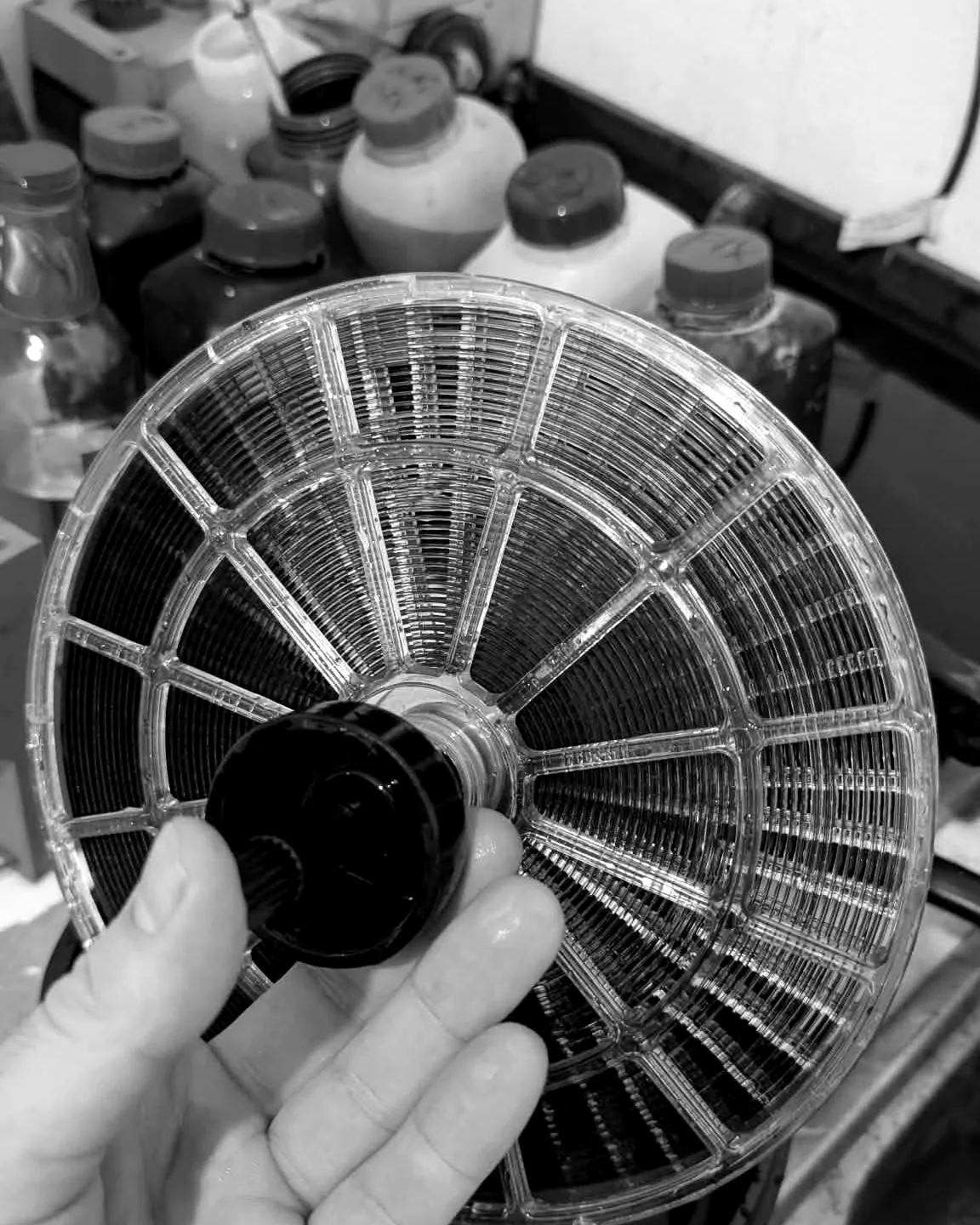
After filming, we send the exposed cartridges to an external film lab. Kodak VISION3 is processed using ECN-2, a series of chemical baths that produces a stable colour negative. The standard colour developer stage takes three minutes at 41.1°C. The full process includes further baths, washing and drying.

Leaving it to dry
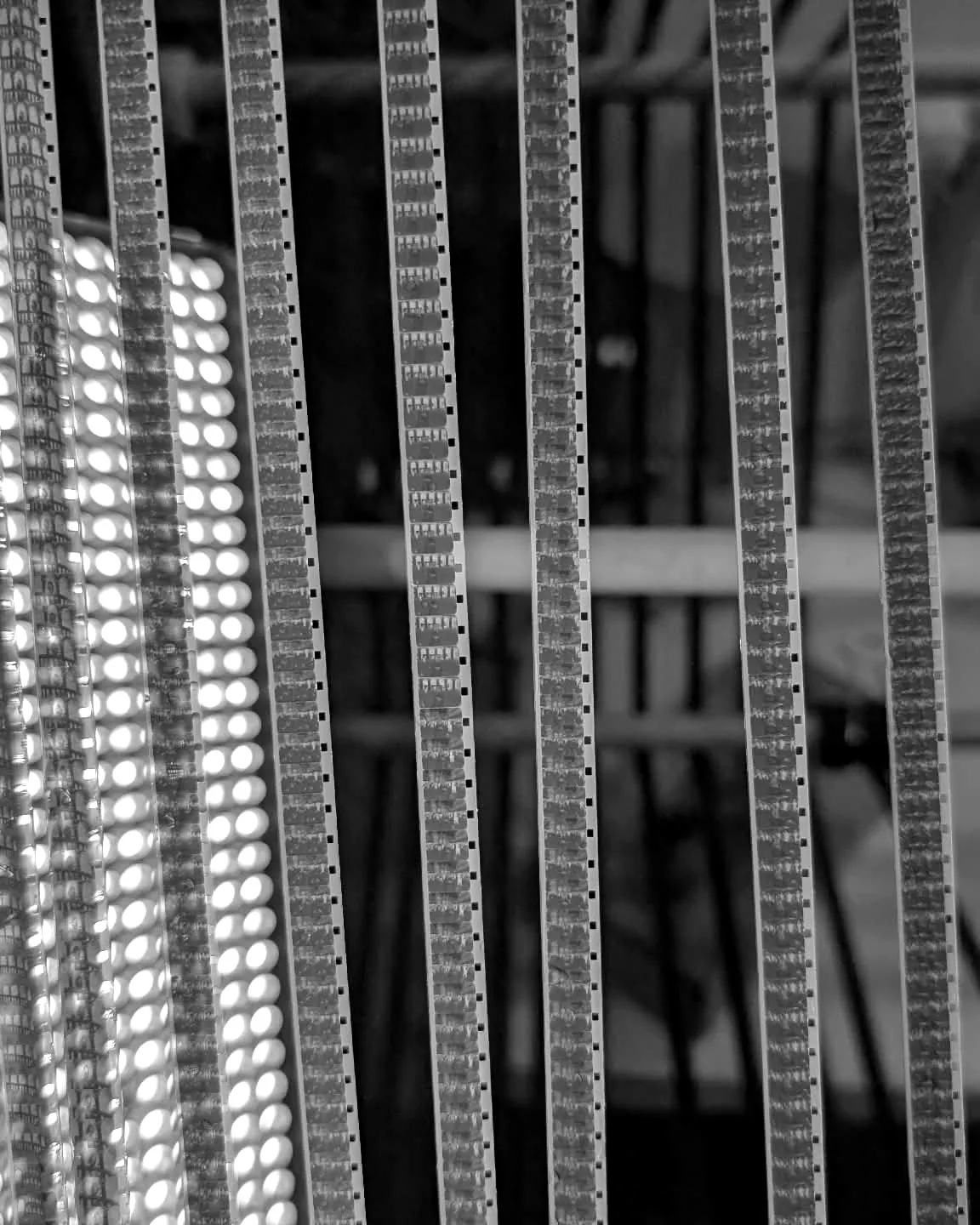
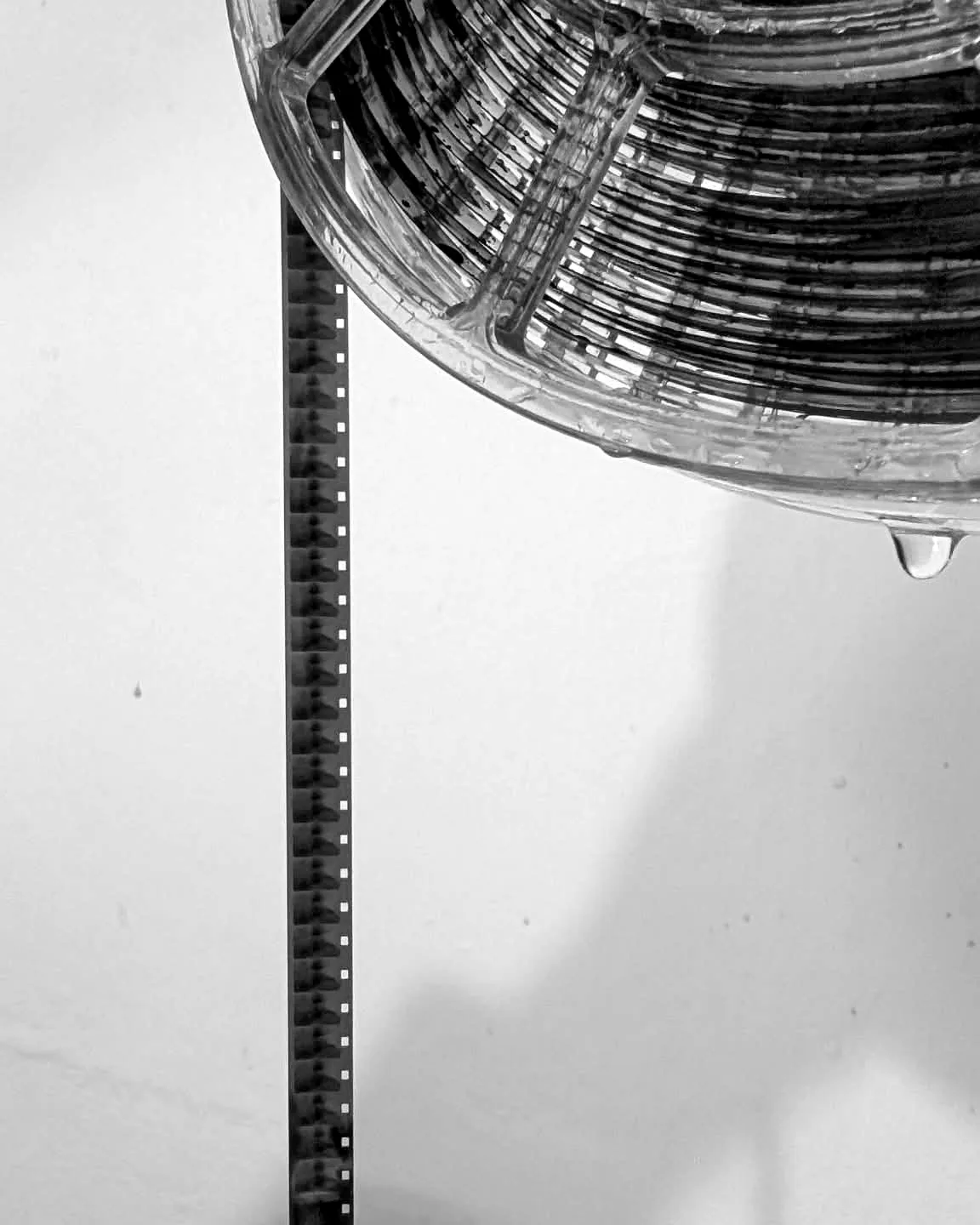
Once processing and washing are complete, the film needs to dry thoroughly. The emulsion must be handled carefully and kept clean. Only then is the negative ready for scanning.

Scanning every frame
The scanner captures each frame individually and saves it as a TIFF file. Those still images become a digital sequence, ready for playback and editing. The scanned negative also needs colour inversion and grading. Its grain and small variations are already there, recorded on the film.

Our cameras
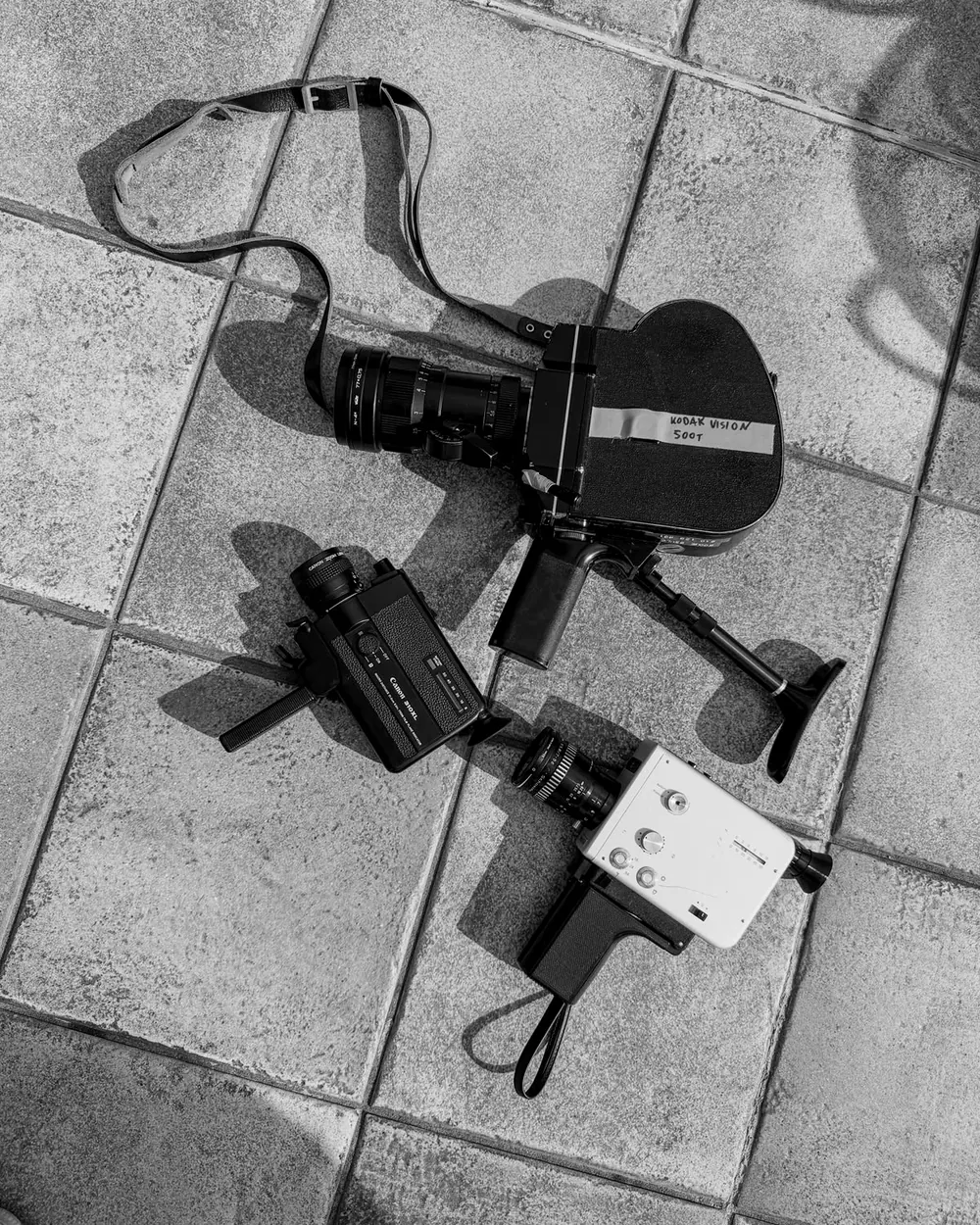
We shoot on a mix of cameras — some Super 8, plus a Krasnogorsk-3, a Russian 16mm camera. Each one has its own character and quirks that are part of the look.
Watch our Super 8 wedding films to see where the process leads. If you would like us to shoot yours on film, get in touch.
FOLLOW US ON INSTAGRAM@PUREAMOURFILMS